Home and life
How long should you keep documents? A simple retention guide
Keep everything and you drown in paper. Throw out the wrong thing and you regret it at tax time. Here is a clear, general guide to how long common documents are worth keeping.
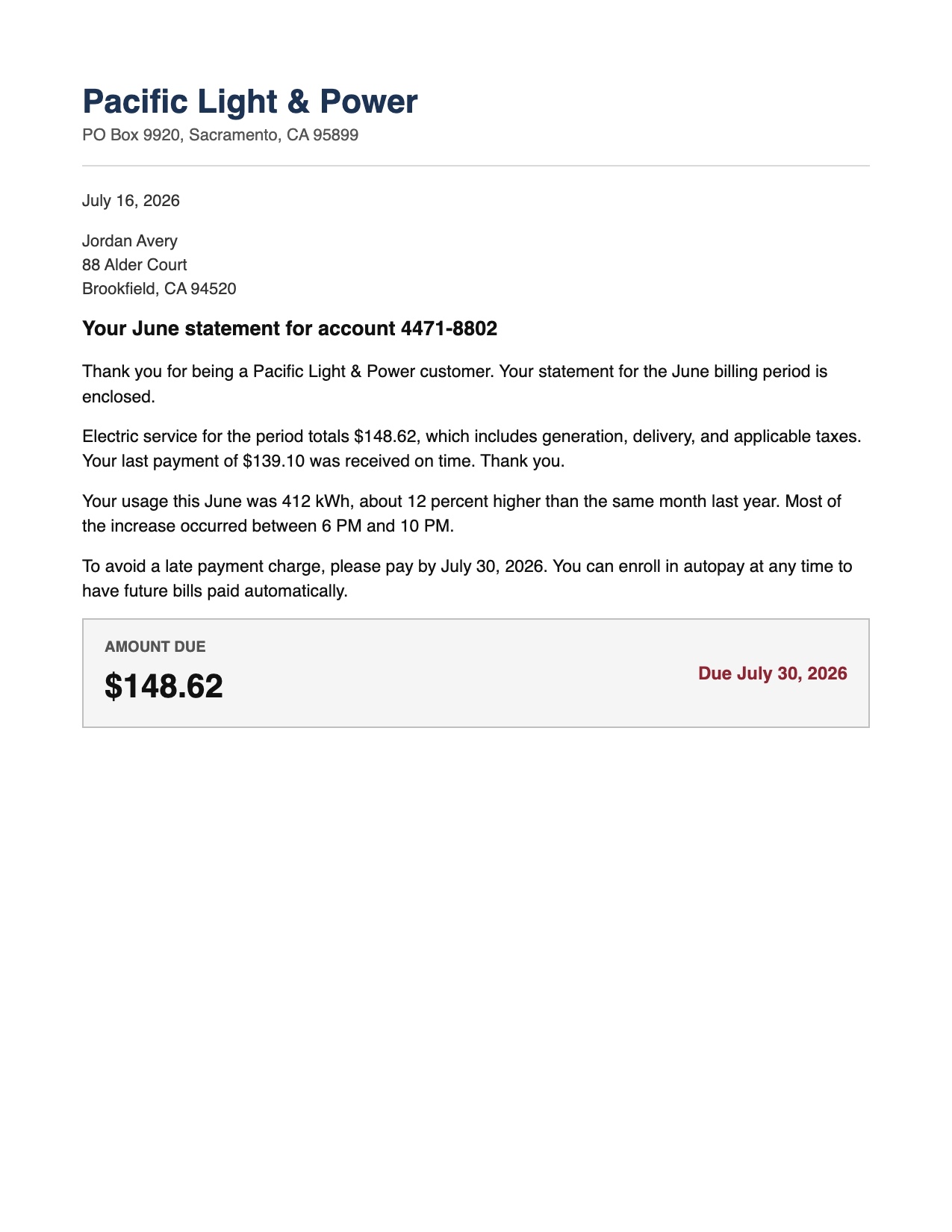
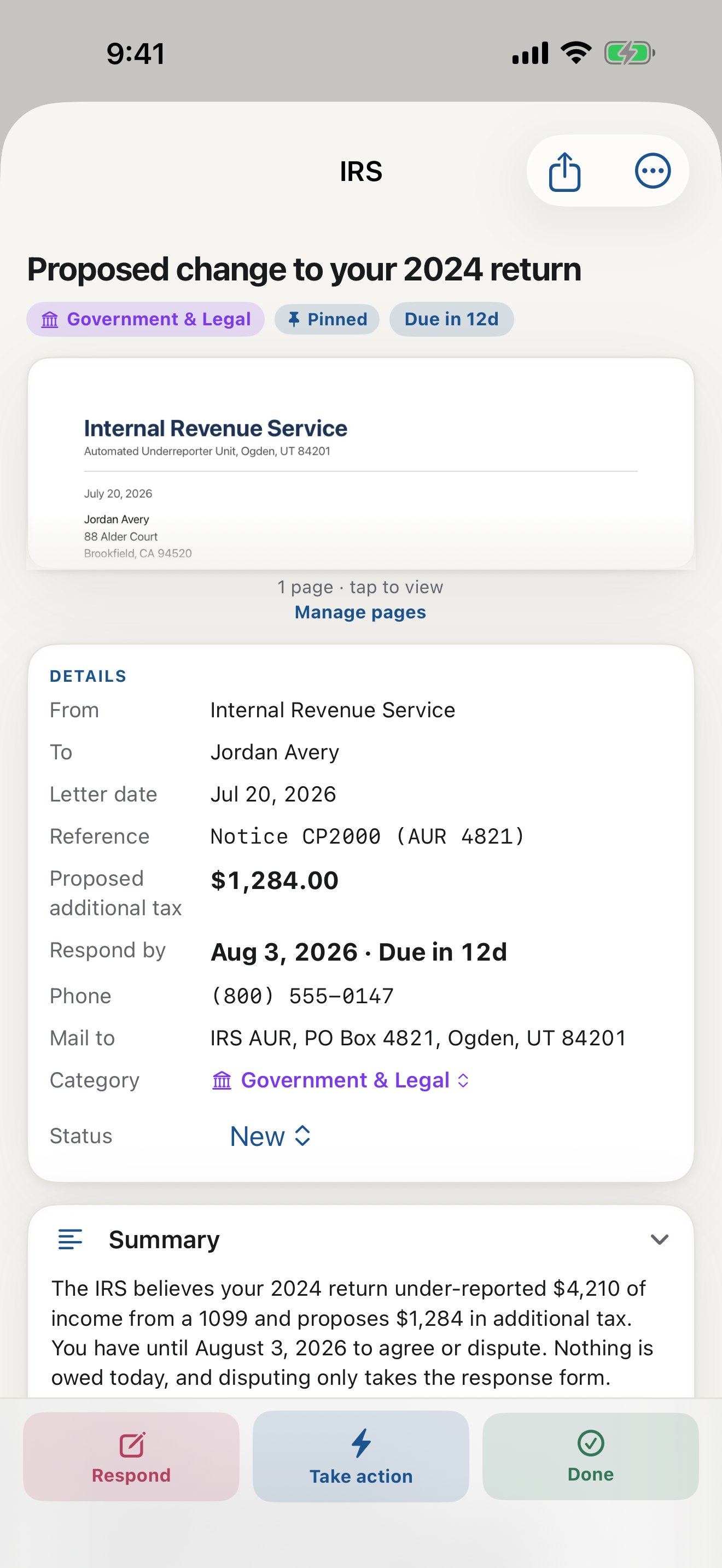
These are common general guidelines, not rules for your specific situation. Retention periods can vary by where you live and by your circumstances, so treat this as a starting framework and confirm anything important for your own case.
Keep for about a month
- Routine receipts for small purchases, once you have checked them against your card statement and you are past any return window.
- ATM and deposit slips, once the transaction shows correctly on your statement.
Keep for about a year
- Monthly bills and utility statements, once paid and reconciled, unless you need them for a tax deduction or a warranty.
- Pay stubs, until you have checked them against your annual tax summary.
- Bank and credit card statements, unless they support a tax return, in which case they follow the tax timeline below.
Keep for several years
- Tax returns and their supporting documents. Many people keep these for several years because tax authorities can review returns within a set window, and that window can be longer in some situations. A common conservative habit is to keep them for around seven years.
- Records that support the value of things you own, such as home improvement receipts, for as long as you own the asset plus the tax window after you sell.
- Medical bills and explanations of benefits, at least until the matter is fully resolved and reconciled, and longer if they support a tax deduction.
Keep indefinitely
- Identity and legal documents: birth and marriage certificates, passports, Social Security records, wills, deeds, and similar. These are the documents to keep in original form, in a safe place.
- Records with no natural end, such as loan payoff confirmations and major legal agreements.
What to shred
When you do dispose of documents, shred anything with account numbers, a Social Security number, or other identifying details. Identity theft often starts in a recycling bin.
The easier way to hold all of this
The reason retention is stressful is that it asks you to remember rules for dozens of document types. A digital archive removes most of that burden. When every letter is scanned, dated, and filed by category, keeping something for seven years costs nothing and takes no space, and finding it later takes a second.
LetterDesk turns your mail into exactly that archive. Each letter is read, categorized, and dated when you scan it, so a bill, a tax document, and a medical statement each sit in the right place, searchable for as long as you want to keep them. You can keep the digital record effortlessly and shred the paper you no longer need, holding on only to the true originals that must exist on paper.
Shrink the keep pile by going digital
Most keep-or-toss anxiety disappears once you digitize paper documents. Scan important documents before you shred anything borderline, and the question changes from where will I store this to why would I ever lose it. LetterDesk is a document scanner app and an app for storing important documents in one: it helps you keep important documents organized by year and category, tames paper clutter at the source, and makes it painless to organize documents at home without a filing cabinet.
This guide is general information to help you understand and organize your mail. It is not legal, tax, or financial advice. For a decision with real consequences, confirm the details on your own letter and consider speaking with a qualified professional.
Common questions
How long should I keep tax records?
Many people keep tax returns and their supporting documents for around seven years, because review windows can extend beyond the usual few years in some situations. Confirm the rules that apply where you live for your own case.
How long should I keep utility bills and receipts?
Routine receipts can usually go after about a month once checked against your statement and past any return window. Paid utility bills are often kept for about a year, longer if they support a tax deduction or a warranty.
What documents should I keep forever?
Identity and legal documents such as birth and marriage certificates, passports, Social Security records, wills, and deeds should be kept indefinitely in original form. A digital scan is a useful backup, but keep the physical originals safe.
Keep reading
IRS Letter: What Does This Letter Mean and What to Do Next
Got an IRS letter and felt your stomach drop? Here is a calm, step-by-step way to read it, understand what it wants, and respond without panic.
Medical Bill Explanation: How to Read an EOB Without the Panic
Medical bills and EOBs are confusing on purpose. Here is how to tell a real bill from a statement, spot errors, and understand what you actually owe.
Debt Collection Letter: What Does This Letter Mean and How to Respond
A collection letter is stressful, but you have rights and options. Here is how to read it, verify the debt, and respond in writing the right way.
How to Organize Paper Mail at Home (A System That Sticks)
Tired of the pile on the counter? Here is a simple, realistic system for organizing paper mail so nothing important gets lost or forgotten again.
The Best App to Keep Track of Bills and Due Dates
Looking for an app to keep track of bills and due dates? Here is what actually works, why most bill trackers fall short, and how to never miss a payment again.
The Best Way to Organize Documents at Home
The best app and system to organize your documents at home: bills, letters, IDs, and records, all searchable in one place, without a filing cabinet.
An App That Reads Your Mail For You: A Smarter Way to Manage Documents
Tired of apps that only scan? Meet the app that actually reads your mail and documents for you, pulls out what matters, and handles the next step.
The AI That Reads Your Mail and Tells You What to Do
Meet the AI that reads your mail and tells you what to do: it explains any confusing letter in plain words, finds the deadline, and gives you the next step.
Understand Any Document in Any Language, Fast
How to understand any document in any language, fast: LetterDesk explains official letters and mail in plain words for parents, seniors, and immigrants.
Ask Questions About Any Document With AI
Snap a letter and ask questions about any document with AI. LetterDesk reads your mail, finds the deadline, and answers what to do in plain words.
Paper Clutter: What to Keep, What to Toss, and How to Go Digital
A calm method for the paper pile: what to keep, what to shred, and how a document scanner app turns the survivors into a searchable digital archive.
How to Scan Important Documents on iPhone and Keep Them Safe
A practical guide to scan important documents with your iPhone: flat, sharp, upright pages, plus how to store, find, and back up the digital copies.
Scan a Letter and Translate It: Read Mail in Any Language
How to scan a letter and translate what it really means: not word-for-word text, but the sender, the ask, the amount, and the deadline, in your language.
Scan to calm
The letter does not just get scanned. It gets handled.
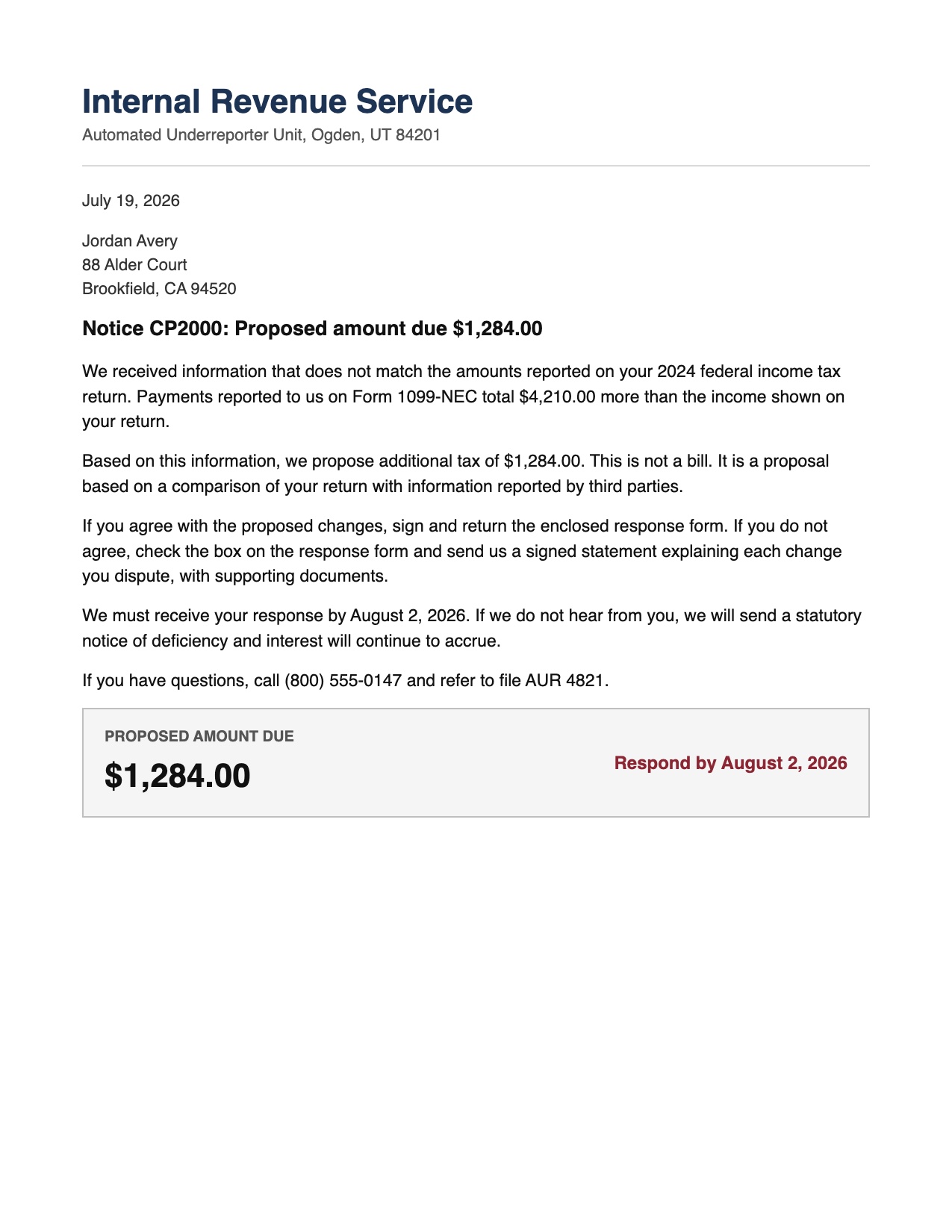
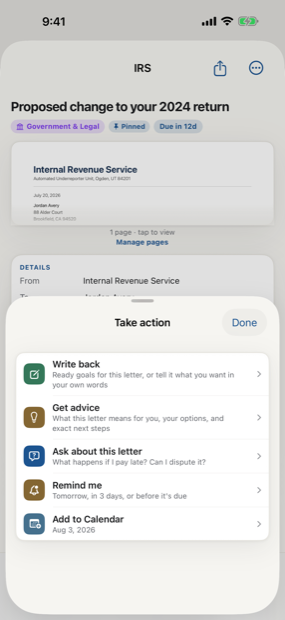
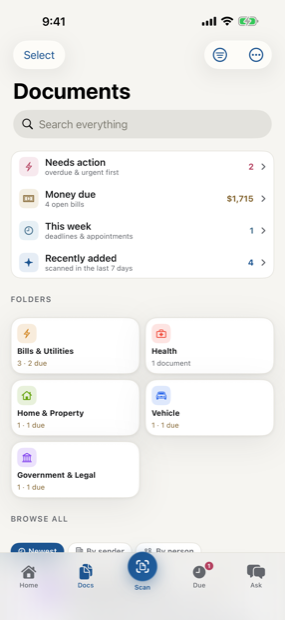
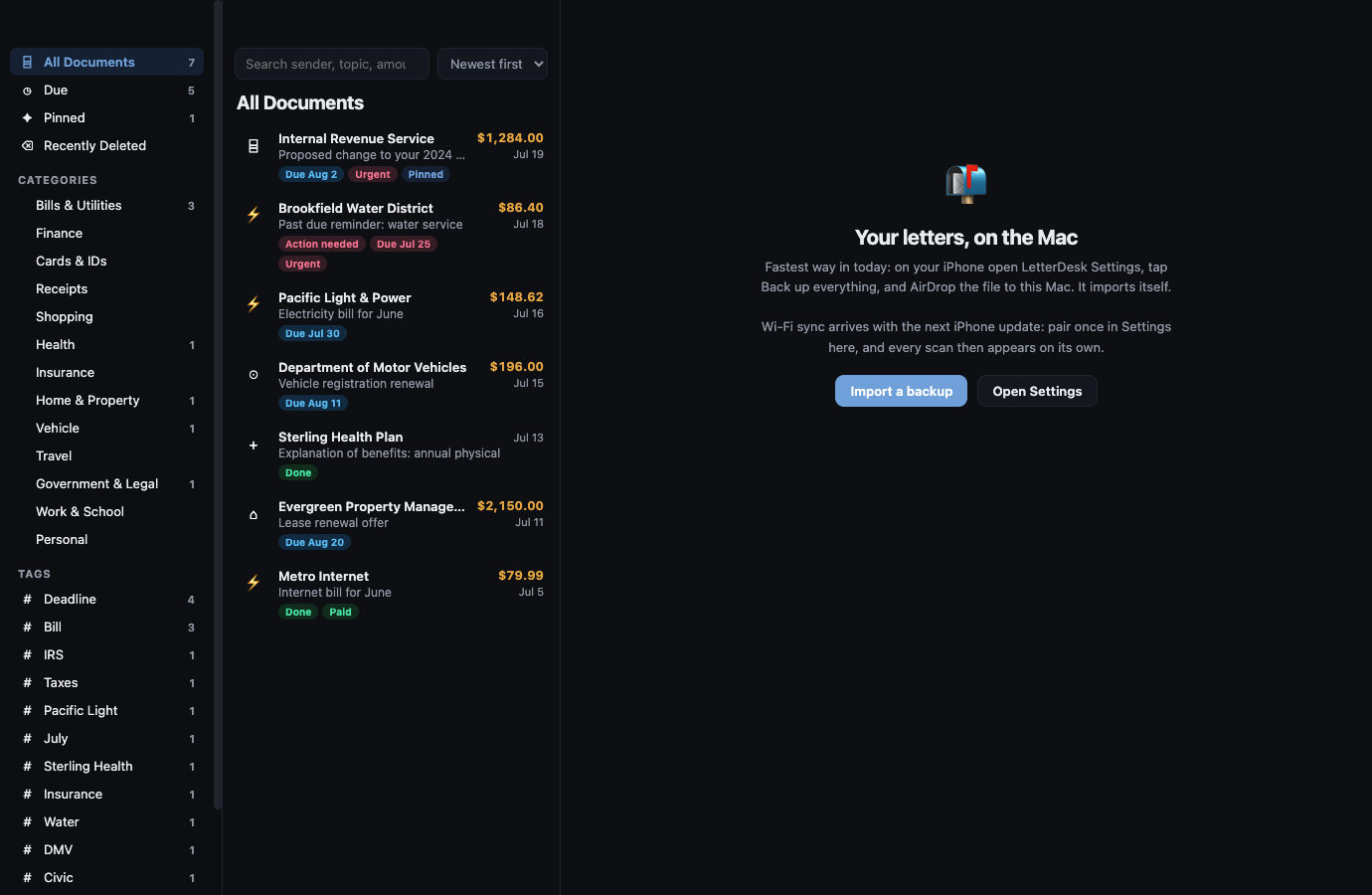
Across every page, LetterDesk shows the full path: read the letter, tell you what to do next, file it automatically, and make it easy to find again.
The next hard letter can be easy.
Scan it, and let LetterDesk read it for you.
In private beta now. Leave your email and we will tell you the day it lands.