Finance mail
How to respond to a debt collection letter
A letter from a debt collector can feel like a threat. It is really a starting point, and you have more rights and time than the tone suggests. Here is how to handle it calmly.
Do not ignore it, and do not panic-pay it
The two worst reactions to a collection letter are ignoring it and immediately paying it without checking. Ignoring it lets the matter escalate. Paying it blindly can mean paying a debt that is not yours, is wrong, or is too old to be enforceable. The right move sits in between: read it, verify it, and respond in writing.
Read for the key facts
A collection letter should tell you who is collecting, who the original creditor was, how much they claim you owe, and how to dispute it. Note that the collector and the original creditor are often different companies, and the debt may have been sold more than once. Write down the amount claimed and any deadline mentioned.
You can ask them to verify the debt
In many places you have the right to request that a collector validate the debt, which means proving that it is real, that the amount is right, and that they have the right to collect it. This request generally must be made in writing, and often within a limited window after their first contact, so timing matters. A validation request is a normal, routine step, not an admission of anything.
Always respond in writing, and keep records
Phone calls leave no record. A written response, kept with a copy for yourself, creates a paper trail that protects you. Keep the original letter, the envelope, and copies of everything you send. If you mail your response, keep proof of mailing.
Watch for time limits and re-aging
Old debts can pass a legal time limit for enforcement, and in some cases making a payment or even acknowledging a very old debt can restart that clock. This is one reason not to rush a payment before you understand what you are dealing with. If a debt seems very old, it is worth understanding the rules that apply where you live before you act.
Keep the letter and the clock in one place
Collection matters generate a sequence of letters, and the dates on them are what determine your options. Losing track of when the first letter arrived, or missing a validation window, is how people give up rights they did not know they had.
LetterDesk helps here by scanning each letter, reading out who is collecting and who the original creditor was, capturing the amount and any deadline, and filing the whole sequence under Finance so it stays together and searchable. If you decide to send a validation request or a dispute, LetterDesk can draft a clear, factual letter from the details it read, ready to print and mail. It keeps the timeline straight so you respond within the windows that matter.
When to get real help
If you are being sued, if the amounts are large, or if something feels wrong, this is the point to talk to a qualified professional or a nonprofit credit counselor. Understanding the letter well is what lets you have that conversation from a position of clarity rather than fear.
Read it once, understand it fully
The fastest way out of collection stress is clarity. LetterDesk is an app that reads your mail: scan the letter with the document scanner app built in, get an AI document summary of what does this letter mean and the dates that matter, and ask questions about any document, like whether the debt is near its time limit. It helps you understand any document before you spend a dollar, and it will keep important documents organized so your dispute letter and their reply never separate.
This guide is general information to help you understand and organize your mail. It is not legal, tax, or financial advice. For a decision with real consequences, confirm the details on your own letter and consider speaking with a qualified professional.
Common questions
Should I pay a debt collection letter right away?
Not before you verify it. You generally have the right to ask a collector to validate the debt in writing, proving it is yours and the amount is right. Paying or even acknowledging a very old debt can sometimes restart a legal time limit, so it is worth understanding what you owe first.
How should I respond to a collection letter?
Respond in writing and keep a copy for yourself, along with the original letter and proof of mailing. A written record protects you in a way a phone call cannot.
Can LetterDesk write a dispute or validation letter for me?
Yes. LetterDesk reads the collection letter, captures the collector, the original creditor, the amount, and the deadline, and can draft a factual validation or dispute letter from those details. This is general drafting help with wording, not legal advice.
Keep reading
IRS Letter: What Does This Letter Mean and What to Do Next
Got an IRS letter and felt your stomach drop? Here is a calm, step-by-step way to read it, understand what it wants, and respond without panic.
Medical Bill Explanation: How to Read an EOB Without the Panic
Medical bills and EOBs are confusing on purpose. Here is how to tell a real bill from a statement, spot errors, and understand what you actually owe.
How to Organize Paper Mail at Home (A System That Sticks)
Tired of the pile on the counter? Here is a simple, realistic system for organizing paper mail so nothing important gets lost or forgotten again.
How Long Should You Keep Documents? A Paper Clutter Guide
How long to keep bills, tax records, medical statements, and receipts, plus what to shred and what to keep forever, in one clear guide.
The Best App to Keep Track of Bills and Due Dates
Looking for an app to keep track of bills and due dates? Here is what actually works, why most bill trackers fall short, and how to never miss a payment again.
The Best Way to Organize Documents at Home
The best app and system to organize your documents at home: bills, letters, IDs, and records, all searchable in one place, without a filing cabinet.
An App That Reads Your Mail For You: A Smarter Way to Manage Documents
Tired of apps that only scan? Meet the app that actually reads your mail and documents for you, pulls out what matters, and handles the next step.
The AI That Reads Your Mail and Tells You What to Do
Meet the AI that reads your mail and tells you what to do: it explains any confusing letter in plain words, finds the deadline, and gives you the next step.
Understand Any Document in Any Language, Fast
How to understand any document in any language, fast: LetterDesk explains official letters and mail in plain words for parents, seniors, and immigrants.
Ask Questions About Any Document With AI
Snap a letter and ask questions about any document with AI. LetterDesk reads your mail, finds the deadline, and answers what to do in plain words.
Paper Clutter: What to Keep, What to Toss, and How to Go Digital
A calm method for the paper pile: what to keep, what to shred, and how a document scanner app turns the survivors into a searchable digital archive.
How to Scan Important Documents on iPhone and Keep Them Safe
A practical guide to scan important documents with your iPhone: flat, sharp, upright pages, plus how to store, find, and back up the digital copies.
Scan a Letter and Translate It: Read Mail in Any Language
How to scan a letter and translate what it really means: not word-for-word text, but the sender, the ask, the amount, and the deadline, in your language.
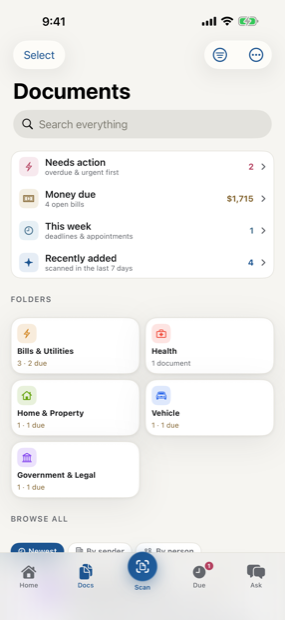
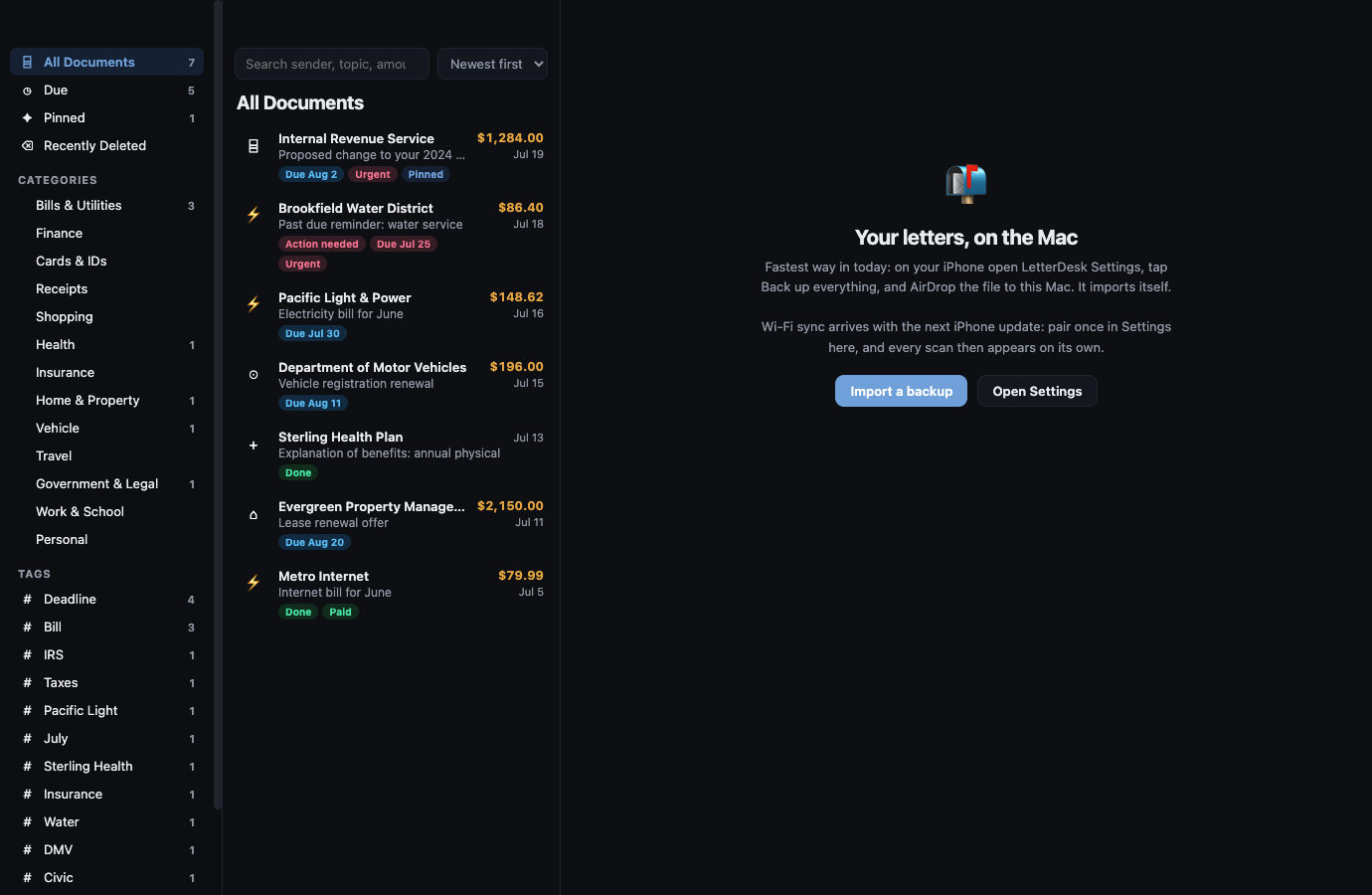
Scan to calm
The letter does not just get scanned. It gets handled.
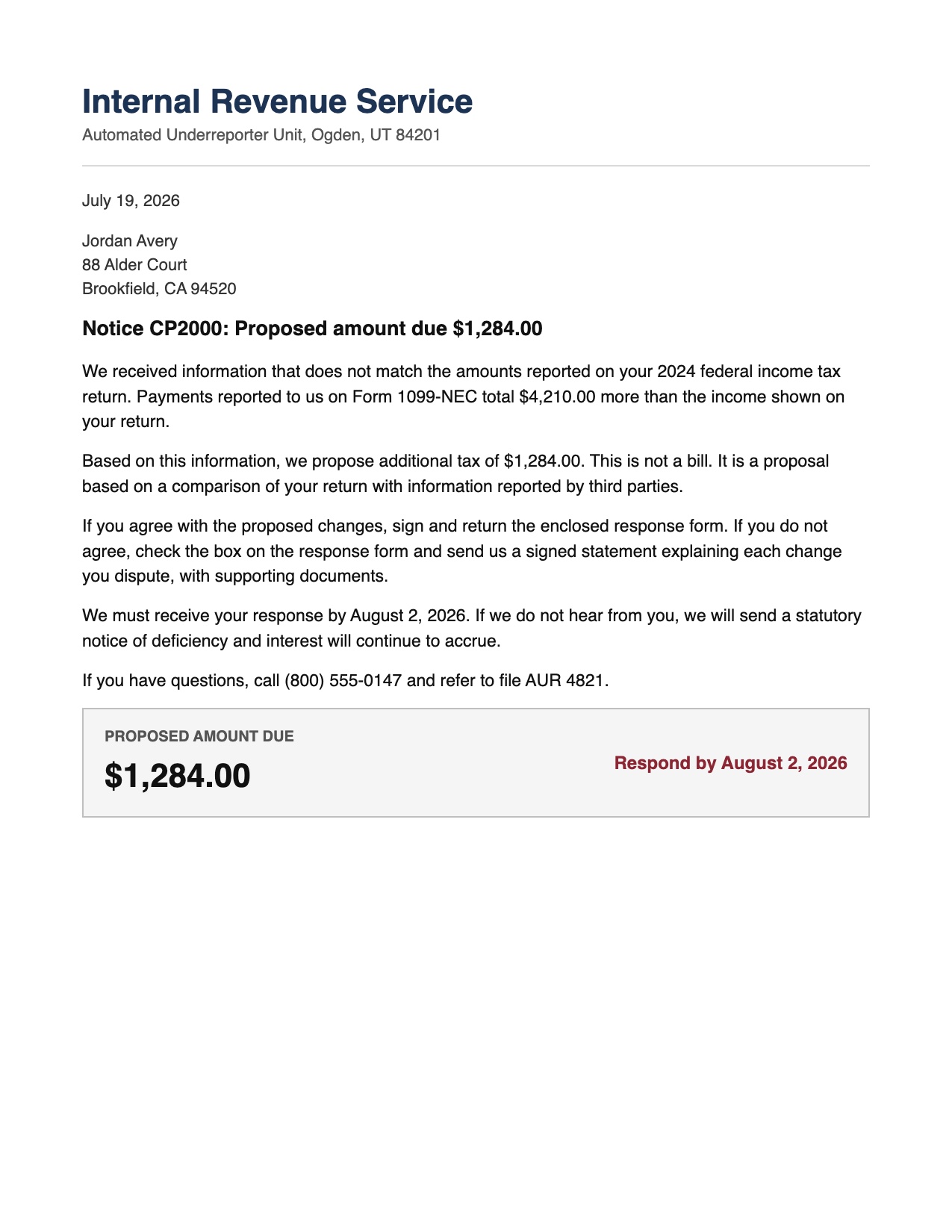
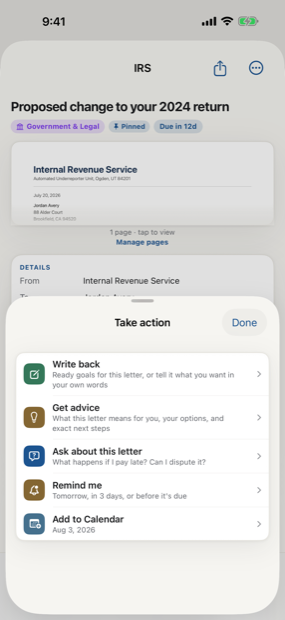
Across every page, LetterDesk shows the full path: read the letter, tell you what to do next, file it automatically, and make it easy to find again.
The next hard letter can be easy.
Scan it, and let LetterDesk read it for you.
In private beta now. Leave your email and we will tell you the day it lands.