Guides
How to scan important documents on iPhone and keep them safe
A phone camera is now a better scanner than the machine at the office, if you use it right. Here is how to get clean, flat scans of the documents that matter, and where they should live afterwards.
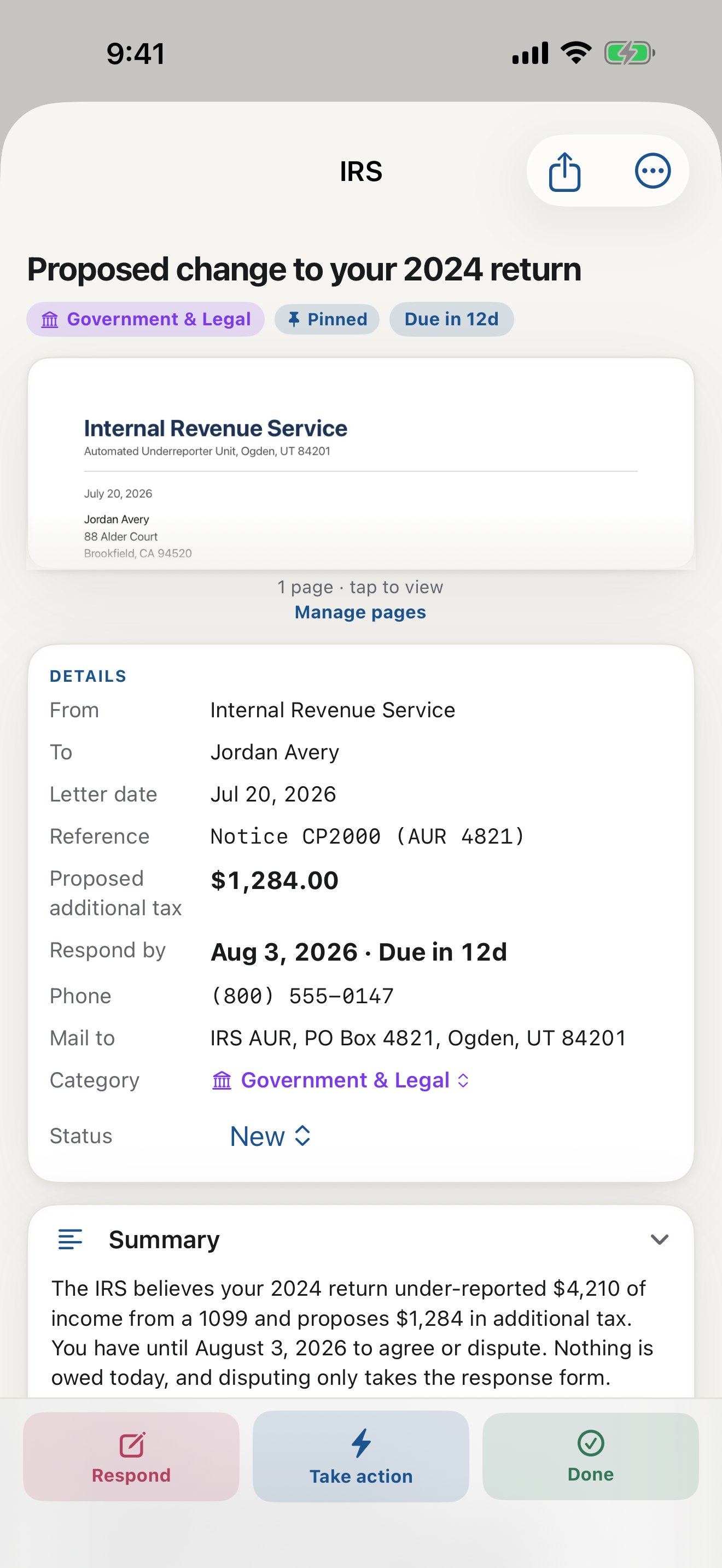
The documents that matter most, the passport page, the insurance policy, the signed lease, the letter with a deadline, deserve better than living in one paper folder that could be lost in a single bad day. Scanning them is the cheap insurance everyone means to buy and keeps postponing. With the right app the whole job takes minutes, and the copies are easier to find than the originals ever were.
Getting a clean scan every time
Lay the page on a flat surface with even light and hold the phone directly above it. A good document scanner app does the rest: it finds the paper, crops away the table, flattens the perspective, and straightens the result so the text reads level. LetterDesk goes further than most, keeping every page you capture, turning sideways shots upright on their own, and never deciding for you that a page was not good enough. You see every page before anything is saved, and you can adjust the corners on the rare page that needs it.
Scan the set, not just the page
Important documents travel in sets: a policy and its declarations page, a lease and its addendum, a statement and the privacy insert that came with it. An app to scan and organize documents keeps a set together as one document instead of scattering it into stray images. That is the quiet difference between a camera roll full of paper photos and an archive you can actually use.
Where the copies should live
A screenshot folder is not a system. An app for storing important documents should do three things: name each document by what it actually is, group it with its family, and make every word searchable. LetterDesk reads each page as it is scanned, so a search for the policy number or the word deductible finds the right page in seconds. It is the difference between storing pages and being able to keep important documents organized for years without effort.
Back up like you mean it
Digitize paper documents once, then let the copies live in more than one place. LetterDesk keeps your archive on your device and can sync it to your Mac over your own Wi-Fi, so a lost phone does not mean lost records, and nothing about your mail sits on someone else's server. For the paper originals that still matter, one labeled envelope in one known drawer beats seventeen very safe places you will not remember.
The ten-minute starter kit
Tonight, scan five things: your insurance cards, the current lease or mortgage statement, the newest pay stub, the passport photo page, and whatever letter is currently stressing you. That is the core of a home archive, it helps you organize documents at home without touching a filing cabinet, and it turns the next scary request for paperwork into a thirty-second search.
This guide is general information to help you understand and organize your mail. It is not legal, tax, or financial advice. For a decision with real consequences, confirm the details on your own letter and consider speaking with a qualified professional.
Common questions
What is the best way to scan documents with an iPhone?
Flat surface, even light, phone parallel to the page, and an app that crops and straightens for you. LetterDesk keeps every capture, turns sideways pages upright, and shows you a preview before anything is saved.
Where should I store scanned important documents?
In an app built for documents rather than a camera roll: one that names, files, and makes every word searchable. LetterDesk stores the archive on your device and can sync a copy to your Mac over your own Wi-Fi.
Should I keep paper originals after scanning?
Keep originals for identity documents, titles, and anything notarized or sealed. For everyday letters and statements, a clear scan is what you will actually use when a question comes up.
Keep reading
IRS Letter: What Does This Letter Mean and What to Do Next
Got an IRS letter and felt your stomach drop? Here is a calm, step-by-step way to read it, understand what it wants, and respond without panic.
Medical Bill Explanation: How to Read an EOB Without the Panic
Medical bills and EOBs are confusing on purpose. Here is how to tell a real bill from a statement, spot errors, and understand what you actually owe.
Debt Collection Letter: What Does This Letter Mean and How to Respond
A collection letter is stressful, but you have rights and options. Here is how to read it, verify the debt, and respond in writing the right way.
How to Organize Paper Mail at Home (A System That Sticks)
Tired of the pile on the counter? Here is a simple, realistic system for organizing paper mail so nothing important gets lost or forgotten again.
How Long Should You Keep Documents? A Paper Clutter Guide
How long to keep bills, tax records, medical statements, and receipts, plus what to shred and what to keep forever, in one clear guide.
The Best App to Keep Track of Bills and Due Dates
Looking for an app to keep track of bills and due dates? Here is what actually works, why most bill trackers fall short, and how to never miss a payment again.
The Best Way to Organize Documents at Home
The best app and system to organize your documents at home: bills, letters, IDs, and records, all searchable in one place, without a filing cabinet.
An App That Reads Your Mail For You: A Smarter Way to Manage Documents
Tired of apps that only scan? Meet the app that actually reads your mail and documents for you, pulls out what matters, and handles the next step.
The AI That Reads Your Mail and Tells You What to Do
Meet the AI that reads your mail and tells you what to do: it explains any confusing letter in plain words, finds the deadline, and gives you the next step.
Understand Any Document in Any Language, Fast
How to understand any document in any language, fast: LetterDesk explains official letters and mail in plain words for parents, seniors, and immigrants.
Ask Questions About Any Document With AI
Snap a letter and ask questions about any document with AI. LetterDesk reads your mail, finds the deadline, and answers what to do in plain words.
Paper Clutter: What to Keep, What to Toss, and How to Go Digital
A calm method for the paper pile: what to keep, what to shred, and how a document scanner app turns the survivors into a searchable digital archive.
Scan a Letter and Translate It: Read Mail in Any Language
How to scan a letter and translate what it really means: not word-for-word text, but the sender, the ask, the amount, and the deadline, in your language.
Scan to calm
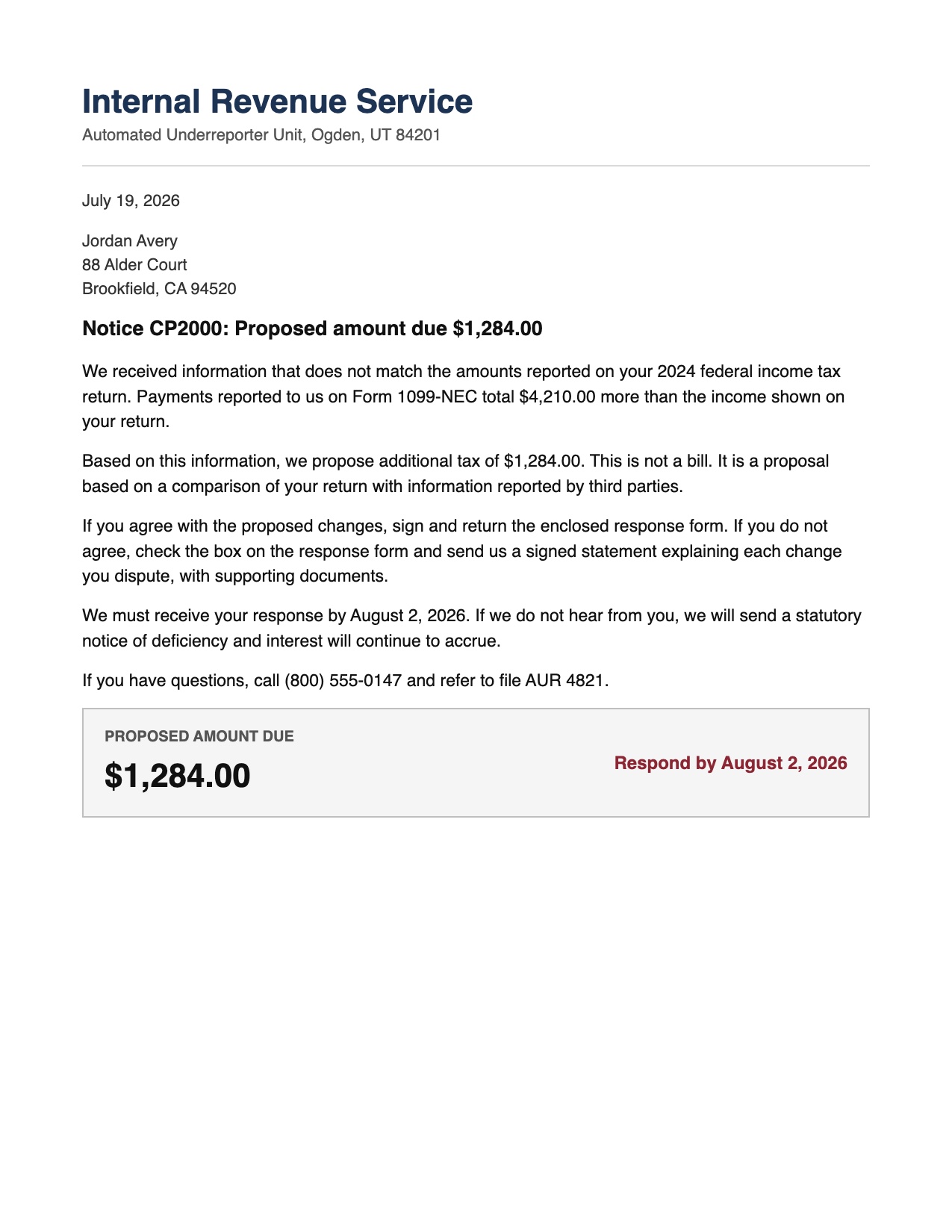
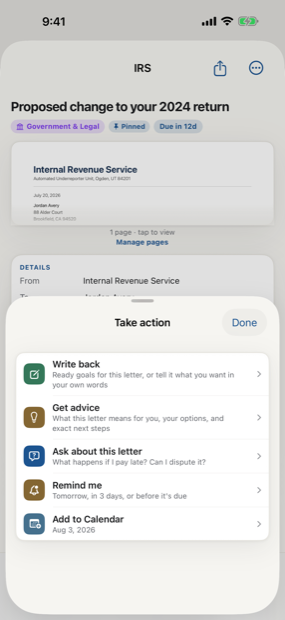
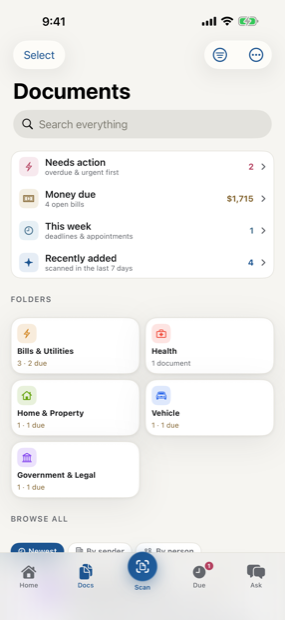
The letter does not just get scanned. It gets handled.
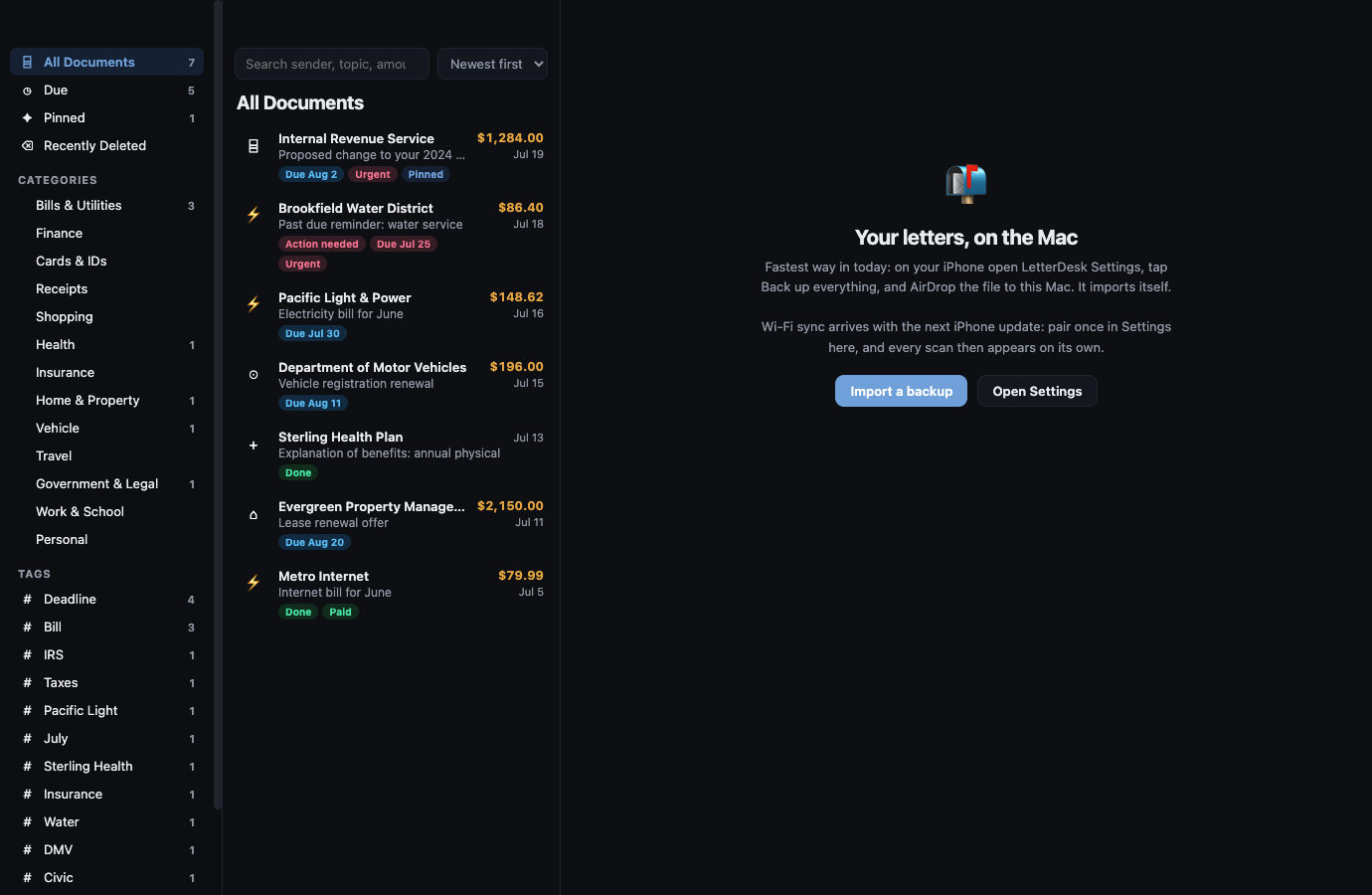
Across every page, LetterDesk shows the full path: read the letter, tell you what to do next, file it automatically, and make it easy to find again.
The next hard letter can be easy.
Scan it, and let LetterDesk read it for you.
In private beta now. Leave your email and we will tell you the day it lands.