How it works
Understand any document, in any language, in seconds
The difference between translating a letter and understanding it, and how to give that clarity to the people you love, in the language they think in.
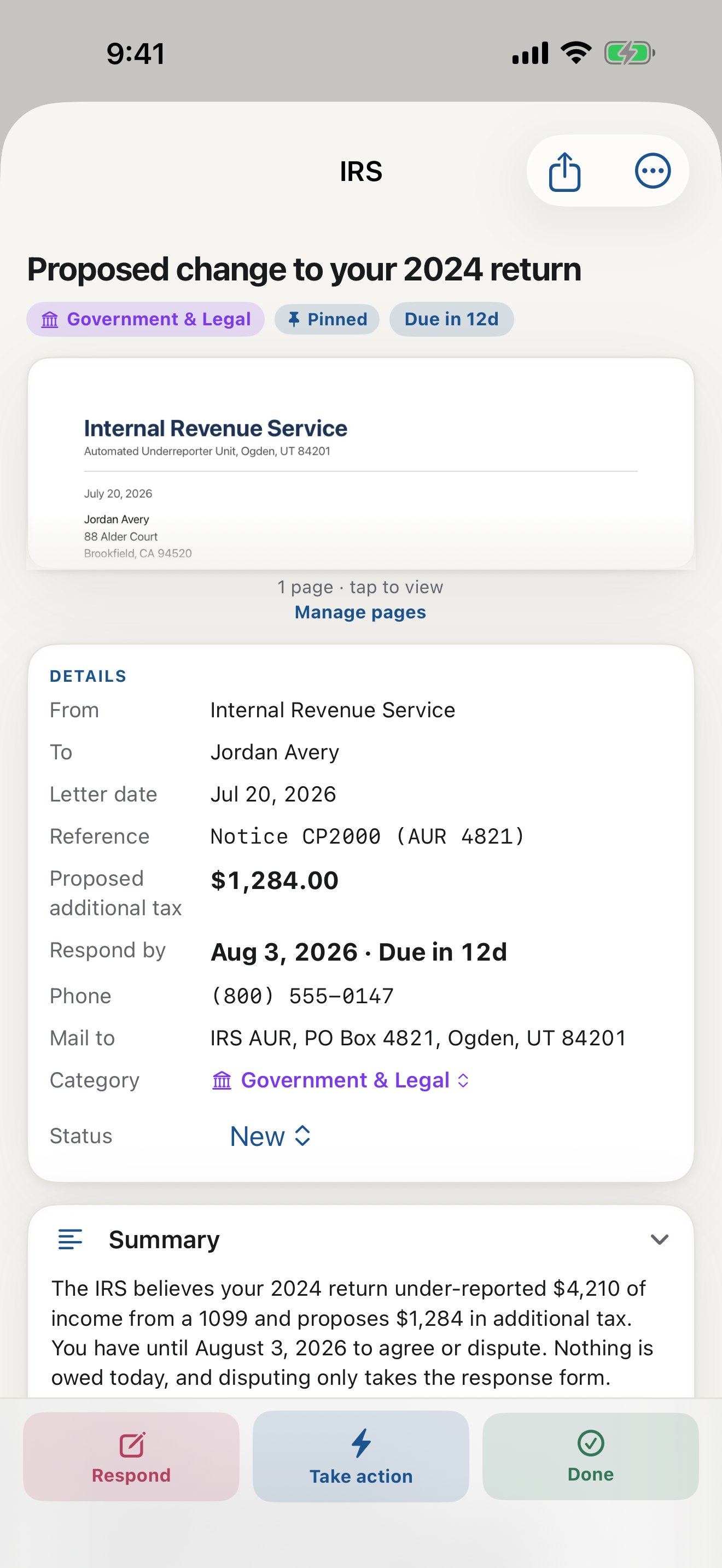
The fastest way to understand any document in any language is to stop translating it word by word and let a trained reader explain what it means. Point your phone at the letter, and within a few seconds you learn what it is, who sent it, what they want, whether there is a deadline or an amount, and what a sensible reply would look like. No dictionary open in another tab, no phone call to a relative, no guessing at the parts that matter most.
That gap between translating a letter and understanding it is where most people get stuck. A translation gives you the words. It rarely tells you that the second paragraph is the one with the deadline, or that the number in bold is a balance and not a penalty. Understanding is the part that lets you breathe.
Why an official letter in another language feels so heavy
Official mail is written to sound serious even in your first language. In a second language, every sentence carries a small fear: what if I miss the one line that matters? A parent opens a letter from a government office and feels it in their chest. A grandparent sets it aside for a child or grandchild who is busy. People who moved for work or study keep a quiet stack of envelopes they mean to get to.
None of that is a failing. Official letters bury the important part on purpose, or near enough. The reassuring truth is that almost every letter, in any language, is built the same way: a sender, a reason, sometimes a date, sometimes an amount, and a request. Once you can see those five things clearly, the fear drains out of the page.
Translating word by word is the slow way, and it misses the point
Copying a letter into a free translator can help you read the words, but it leaves the hard work to you. You still have to decide which sentence is the actual instruction, whether the date is a real deadline or just the day the letter was printed, and whether that figure in bold is what you owe or simply your account balance. Miss one of those and a clean translation can still lead you to the wrong conclusion.
This is the quiet reason people are moving on from the word-by-word method. While one person is still pasting paragraphs into a browser and squinting at the result, someone else has already read the whole letter, found the deadline, and moved on with their evening.
How to understand any document in any language with LetterDesk
LetterDesk is an app for iPhone and Mac that turns a photo of a letter into plain understanding. A trained, highly optimized AI engine reads the page, works out what kind of document it is, and explains it in clear language. English and Persian are supported today, with more languages on the way, and the whole thing runs on your device, so a private letter stays private. There is no account to create, and it works offline.
- Scan the letter. Lay the page flat and take one photo. A bill, a notice, a form, or a handwritten note all work.
- Read it in plain words. The engine explains what the document is and what the sender actually wants, without the heavy phrasing.
- See the parts that matter. The deadline and the amount are pulled out and labeled, so the important line is never buried.
- Ask it anything. This is the heart of it. Ask a real question in your own words: What is this? What do they want from me? What happens if I ignore it? What should I say back? You get a calm, clear answer.
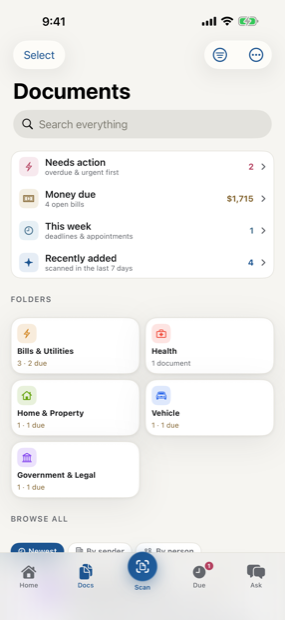
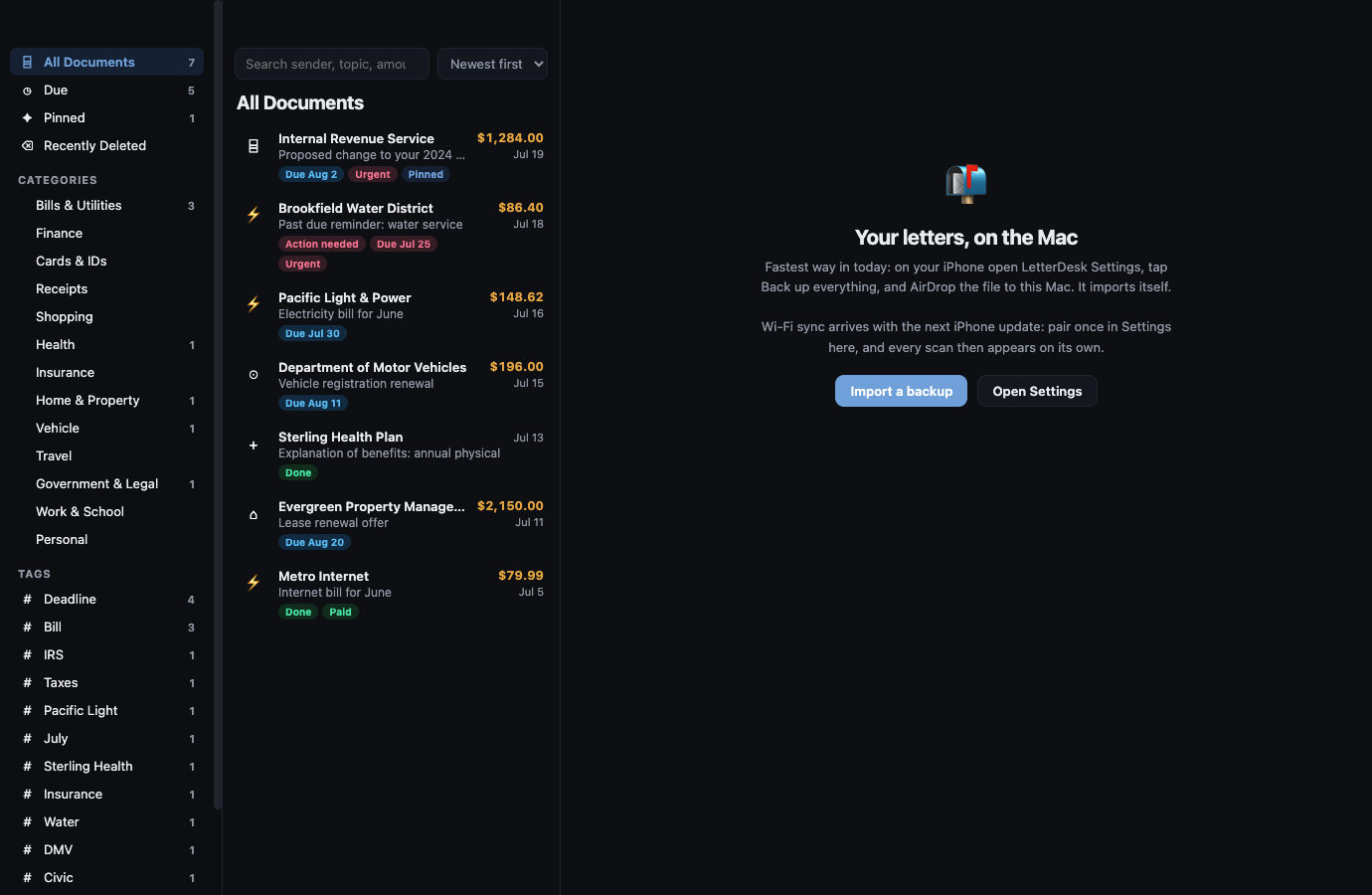
- Keep it forever. Every document is filed by category and remembered, so you can find that letter again months later without digging through a drawer.
The ask-anything part is what changes the feeling. You are not handed a wall of translated text and left alone with it. You can keep asking until the letter makes sense, the way you would with a patient person who happens to have read this exact kind of notice a thousand times.
Setting up a parent or grandparent takes a few minutes
If you are the person your family calls when a confusing letter arrives, this is the part that gives you your evenings back. Install LetterDesk on a parent's or grandparent's phone once, set the language they are most comfortable in, and show them the single motion: photograph the letter, read the plain summary, tap to ask a question. That is the whole skill.
Because it works offline and needs no account, there is nothing to log into and nothing to forget. A grandparent who would never paste text into a website can hold a phone up to an envelope. The dignity of that matters: they get to understand their own mail, in their own language, without waiting for someone else to have a free hour. Across kitchen tables right now, someone is holding a phone up to an envelope and reading a clear answer in Persian, while a stack of the same letters sits unopened somewhere else.
What to check before you act on any letter
Understanding a letter and acting on it are two separate steps, and it is worth keeping them apart. Read the plain summary first, confirm the sender and any deadline, and only then decide what to do. For anything with legal, financial, or medical weight, a plain-language explanation is a calm starting point, not the final word: use it to understand your options, then confirm the important details with the sender or a qualified professional before you commit.
Used that way, the app removes the part that used to steal the most time and nerve: the cold moment of opening an envelope and not knowing what you are looking at. What used to be a bad evening becomes a thirty-second glance. It is a small change, and it quietly separates the people who dread their mail from the people who no longer think about it.
Key takeaways
- To understand any document in any language, aim for meaning, not a word-by-word translation.
- Almost every official letter reduces to five things: sender, reason, date, amount, and request.
- LetterDesk reads mail in plain language, pulls out the deadline and the amount, and lets you ask it anything, in English or Persian today with more languages coming.
- It is simple enough for a parent or grandparent and runs privately on the device, with no account.
- Understand the letter first, then confirm the important details before you act.
LetterDesk is in private beta. If you want the people you love to stop dreading the mail, you can be among the first to know when it opens.
This article is general information, not legal, financial, or medical advice.
Scan a letter and translate the stress away
The same flow works across languages: scan a letter and translate its meaning into words you actually use. The AI that reads your mail gives you an AI document summary in English or Farsi, answers what does this letter mean, and lets you ask questions about any document, from a lease clause to a medical bill explanation. Understand any document your family hands you, whatever language it arrived in.
This guide is general information to help you understand and organize your mail. It is not legal, tax, or financial advice. For a decision with real consequences, confirm the details on your own letter and consider speaking with a qualified professional.
Common questions
Can an app understand a document written in another language, not just translate it?
Yes. A word-by-word translation gives you the words, while a tool built to understand a document reads the whole page and tells you what it means: who sent it, what they want, and whether there is a deadline or an amount. That is the difference between reading a letter and knowing what to do with it.
How can I help my parents or grandparents read official letters?
Set up an app like LetterDesk on their phone once and choose the language they are most comfortable in. They photograph a letter, read a plain summary, and can ask questions about it, so they understand their own mail without waiting for a free hour from a busy relative. It works offline and needs no account, which keeps it simple at any age.
Is it safe to use an app to read private or official mail?
Prefer one that works on your device rather than uploading your letters to a server. LetterDesk runs on the phone or Mac itself and needs no account, so a private letter stays private. Treat any plain-language summary as a clear starting point and confirm important details with the sender before you act.
Keep reading
IRS Letter: What Does This Letter Mean and What to Do Next
Got an IRS letter and felt your stomach drop? Here is a calm, step-by-step way to read it, understand what it wants, and respond without panic.
Medical Bill Explanation: How to Read an EOB Without the Panic
Medical bills and EOBs are confusing on purpose. Here is how to tell a real bill from a statement, spot errors, and understand what you actually owe.
Debt Collection Letter: What Does This Letter Mean and How to Respond
A collection letter is stressful, but you have rights and options. Here is how to read it, verify the debt, and respond in writing the right way.
How to Organize Paper Mail at Home (A System That Sticks)
Tired of the pile on the counter? Here is a simple, realistic system for organizing paper mail so nothing important gets lost or forgotten again.
How Long Should You Keep Documents? A Paper Clutter Guide
How long to keep bills, tax records, medical statements, and receipts, plus what to shred and what to keep forever, in one clear guide.
The Best App to Keep Track of Bills and Due Dates
Looking for an app to keep track of bills and due dates? Here is what actually works, why most bill trackers fall short, and how to never miss a payment again.
The Best Way to Organize Documents at Home
The best app and system to organize your documents at home: bills, letters, IDs, and records, all searchable in one place, without a filing cabinet.
An App That Reads Your Mail For You: A Smarter Way to Manage Documents
Tired of apps that only scan? Meet the app that actually reads your mail and documents for you, pulls out what matters, and handles the next step.
The AI That Reads Your Mail and Tells You What to Do
Meet the AI that reads your mail and tells you what to do: it explains any confusing letter in plain words, finds the deadline, and gives you the next step.
Ask Questions About Any Document With AI
Snap a letter and ask questions about any document with AI. LetterDesk reads your mail, finds the deadline, and answers what to do in plain words.
Paper Clutter: What to Keep, What to Toss, and How to Go Digital
A calm method for the paper pile: what to keep, what to shred, and how a document scanner app turns the survivors into a searchable digital archive.
How to Scan Important Documents on iPhone and Keep Them Safe
A practical guide to scan important documents with your iPhone: flat, sharp, upright pages, plus how to store, find, and back up the digital copies.
Scan a Letter and Translate It: Read Mail in Any Language
How to scan a letter and translate what it really means: not word-for-word text, but the sender, the ask, the amount, and the deadline, in your language.
Scan to calm
The letter does not just get scanned. It gets handled.
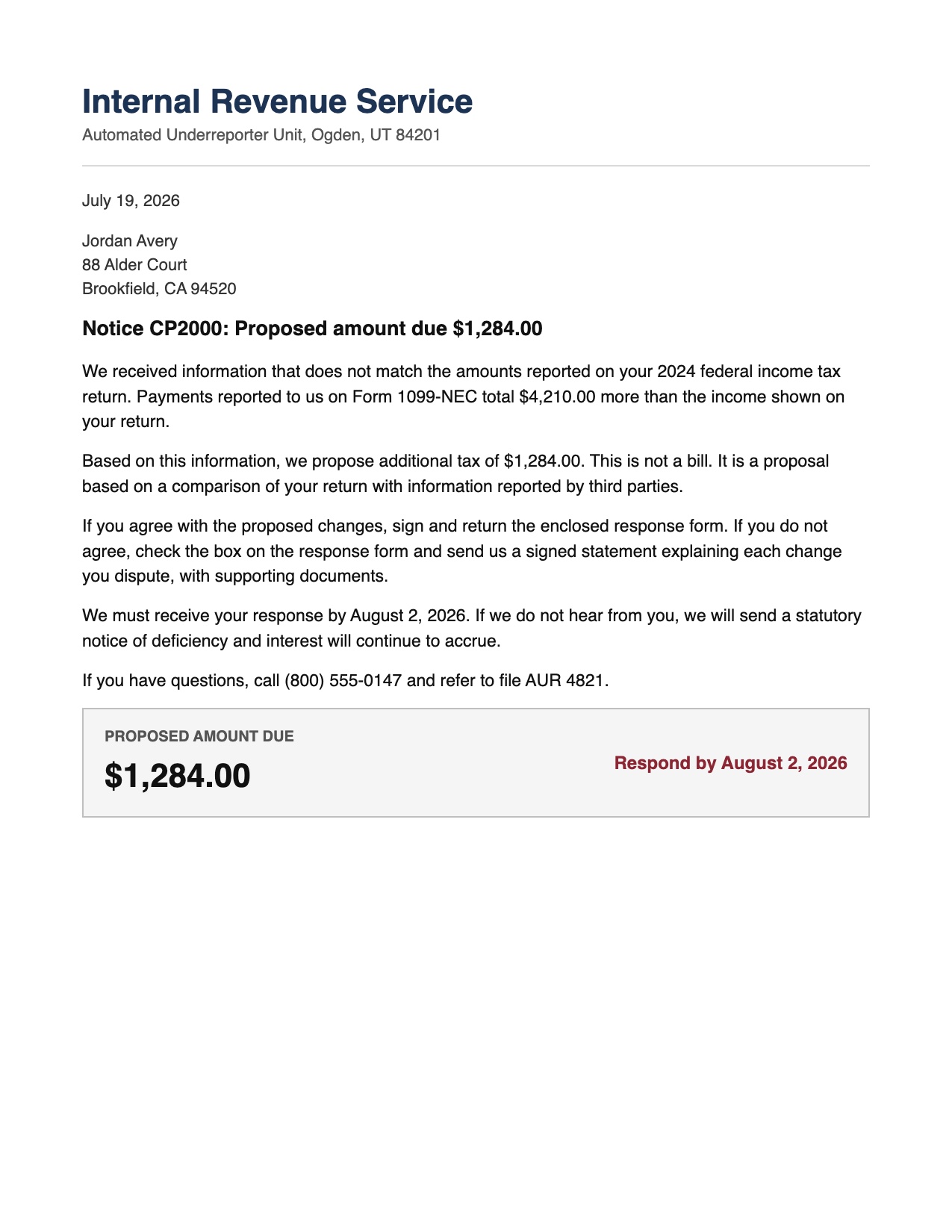
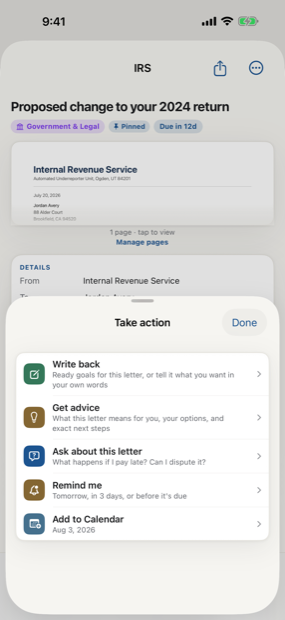
Across every page, LetterDesk shows the full path: read the letter, tell you what to do next, file it automatically, and make it easy to find again.
The next hard letter can be easy.
Scan it, and let LetterDesk read it for you.
In private beta now. Leave your email and we will tell you the day it lands.