Home and life
How to organize paper mail at home so nothing gets lost
Almost every home has a spot where mail piles up. The problem is rarely willpower. It is that paper has no built-in system. Here is one that actually holds.
Why the pile happens
Paper mail accumulates because handling each piece properly takes a decision, and decisions are tiring at the end of a day. So the letter gets set down to deal with later, and later never has a fixed address. Multiply that by seventeen pieces of real mail a month and you get the counter pile. A good system removes the decision, not your discipline.
The one-touch principle
The most durable mail systems share one idea: handle each piece once. When mail comes in, sort it immediately into a small number of clear destinations rather than a single later heap. The classic version uses physical trays:
- Act: anything with a deadline or that needs a response.
- File: anything to keep for records but not act on.
- Recycle: the large volume of advertising and filler, dealt with on the spot.
This works, but it has two weaknesses. The Act tray still relies on you remembering to check it, and the File tray becomes an archive you can never actually search.
Go one step further: capture, then recycle the paper
The modern version of the one-touch system is to capture the important mail digitally the moment it arrives, then keep only the physical documents you truly need. A scanned letter cannot be buried, and a digital archive can be searched in a second. The paper original of most mail is not sacred; the information on it is what matters.
A practical routine looks like this:
- Open mail next to a recycling bin and deal with the filler immediately.
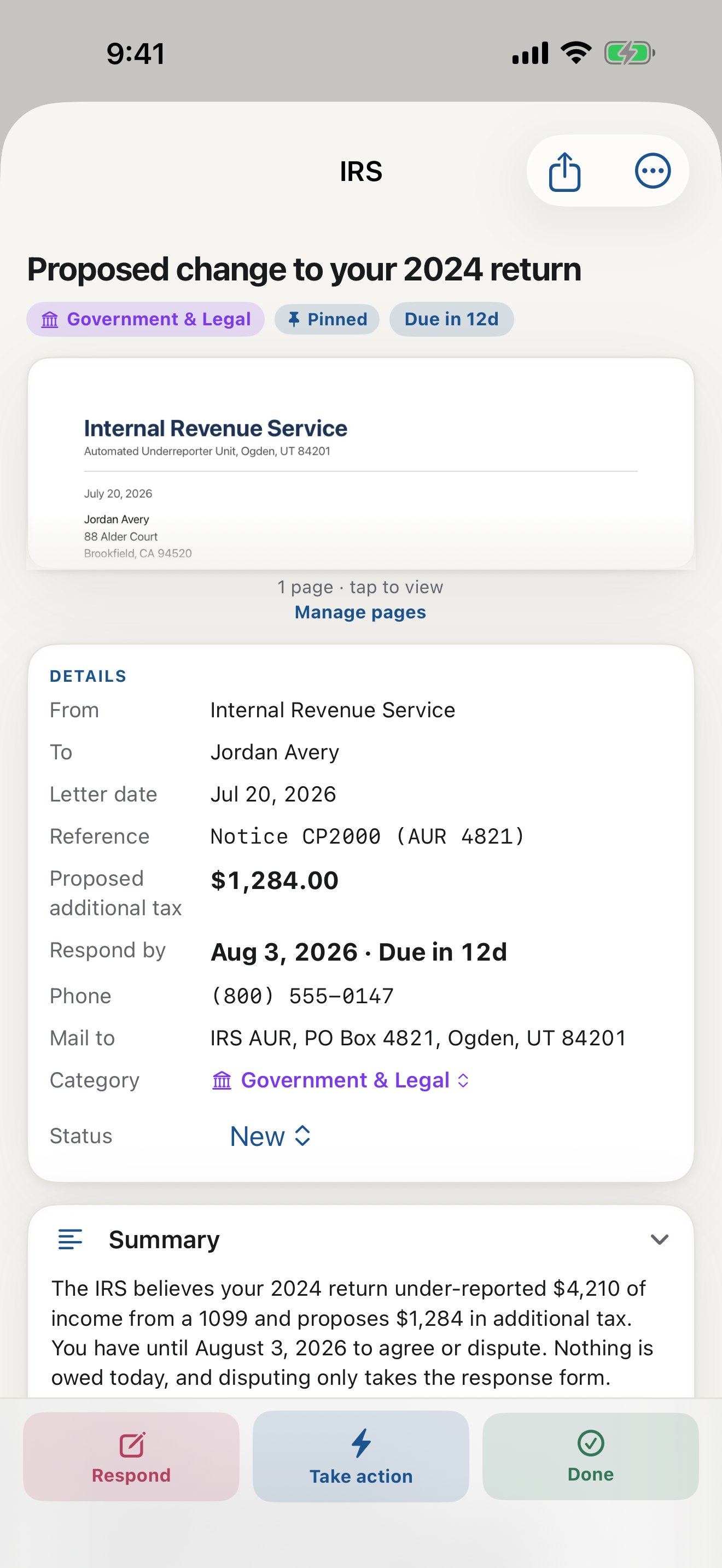
- For anything that matters, scan it right there. A good scanner reads the letter, pulls out any deadline, and files it automatically.
- Recycle the paper unless it is a document you must keep in physical form, such as certain legal or identity papers.
- Trust the reminders instead of a tray you have to remember to check.
Where a tool earns its place
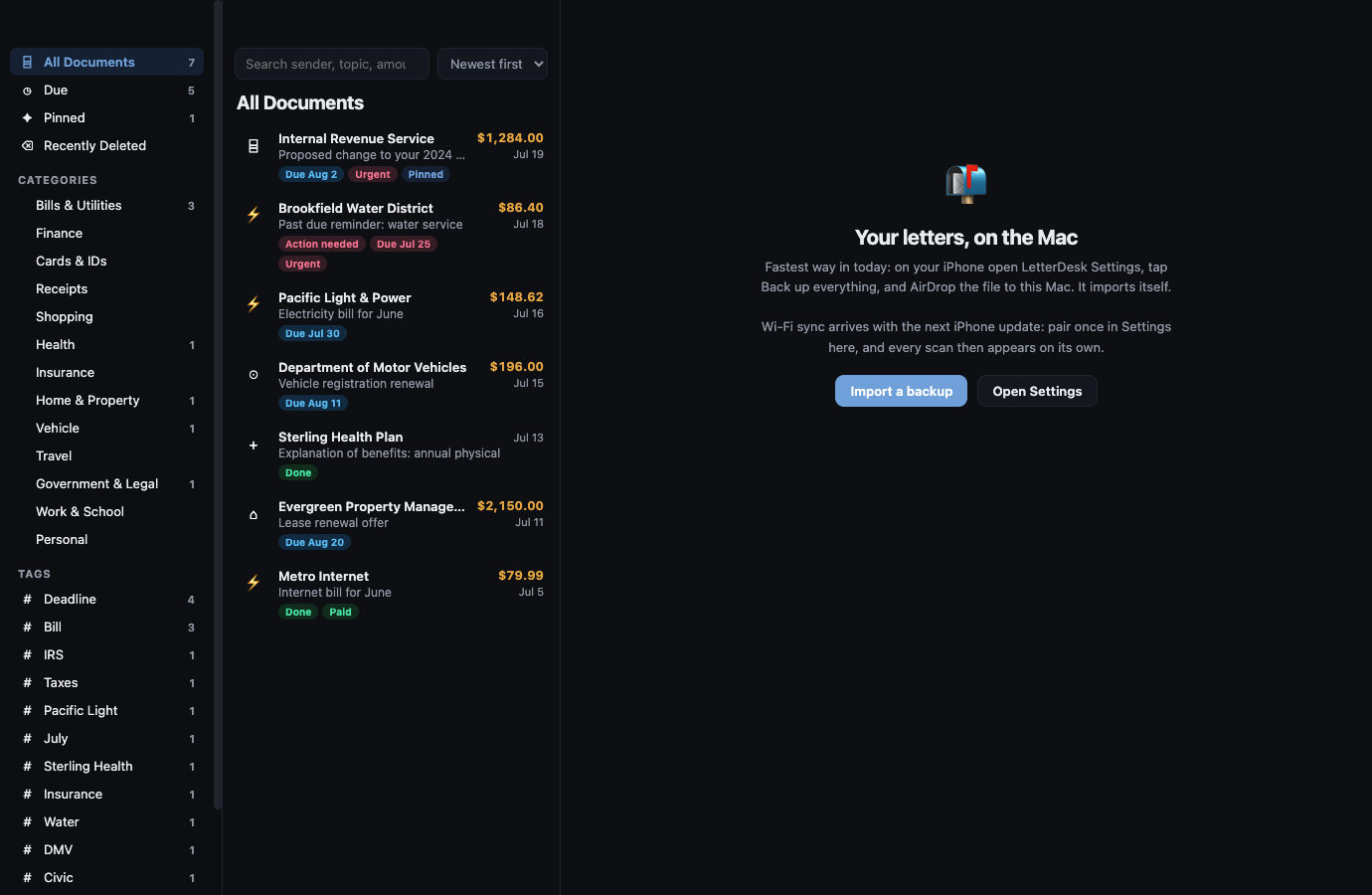
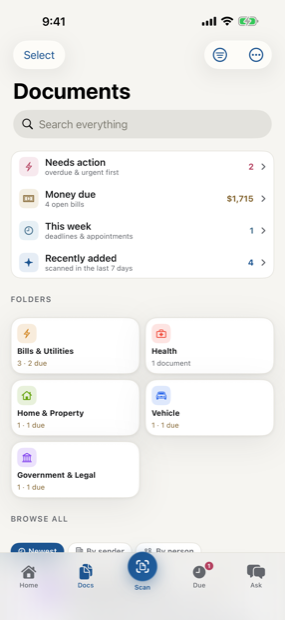
This is precisely the job LetterDesk was built for. You scan a letter, and it reads the page, files it into one of thirteen categories, tracks any deadline, and reminds you before it is due. The Act tray becomes automatic reminders, and the File tray becomes a searchable archive you can reach from your iPhone or your Mac. The counter stays clear because the system, not your memory, is doing the remembering.
Keep it realistic
The best system is the one you will actually run for a year. Do not build an elaborate folder structure you will abandon. Sort into a few clear buckets, capture what matters, and let reminders carry the deadlines. Simplicity is what makes a mail system stick.
The digital half of the system
A tray on the counter solves the pile; a mail scanner app solves the finding. LetterDesk is an app to scan and organize documents in one motion: capture the letter, let it file itself, and the paper clutter stops accumulating meaning. As the best mail management app habit, scan before you sort, digitize paper documents you might need again, and recycle the rest. It is an app that reads your mail, so what you keep is not just stored, it is understood.
This guide is general information to help you understand and organize your mail. It is not legal, tax, or financial advice. For a decision with real consequences, confirm the details on your own letter and consider speaking with a qualified professional.
Common questions
What is the best way to organize paper mail at home?
Handle each piece once. Deal with advertising immediately, capture anything important by scanning it so it is filed and any deadline is tracked, and keep only the physical documents you truly need. A system that remembers deadlines for you beats a tray you have to check.
Should I keep the paper after scanning?
For most mail, the information matters more than the paper, so you can recycle the original once it is captured. Keep physical copies of documents that must exist in original form, such as certain legal, tax, or identity papers.
How does LetterDesk help me organize mail?
Scan a letter and LetterDesk reads it, files it into the right category, tracks any deadline, and reminds you. Your archive is searchable on iPhone and Mac, so nothing important gets buried on the counter again.
Keep reading
IRS Letter: What Does This Letter Mean and What to Do Next
Got an IRS letter and felt your stomach drop? Here is a calm, step-by-step way to read it, understand what it wants, and respond without panic.
Medical Bill Explanation: How to Read an EOB Without the Panic
Medical bills and EOBs are confusing on purpose. Here is how to tell a real bill from a statement, spot errors, and understand what you actually owe.
Debt Collection Letter: What Does This Letter Mean and How to Respond
A collection letter is stressful, but you have rights and options. Here is how to read it, verify the debt, and respond in writing the right way.
How Long Should You Keep Documents? A Paper Clutter Guide
How long to keep bills, tax records, medical statements, and receipts, plus what to shred and what to keep forever, in one clear guide.
The Best App to Keep Track of Bills and Due Dates
Looking for an app to keep track of bills and due dates? Here is what actually works, why most bill trackers fall short, and how to never miss a payment again.
The Best Way to Organize Documents at Home
The best app and system to organize your documents at home: bills, letters, IDs, and records, all searchable in one place, without a filing cabinet.
An App That Reads Your Mail For You: A Smarter Way to Manage Documents
Tired of apps that only scan? Meet the app that actually reads your mail and documents for you, pulls out what matters, and handles the next step.
The AI That Reads Your Mail and Tells You What to Do
Meet the AI that reads your mail and tells you what to do: it explains any confusing letter in plain words, finds the deadline, and gives you the next step.
Understand Any Document in Any Language, Fast
How to understand any document in any language, fast: LetterDesk explains official letters and mail in plain words for parents, seniors, and immigrants.
Ask Questions About Any Document With AI
Snap a letter and ask questions about any document with AI. LetterDesk reads your mail, finds the deadline, and answers what to do in plain words.
Paper Clutter: What to Keep, What to Toss, and How to Go Digital
A calm method for the paper pile: what to keep, what to shred, and how a document scanner app turns the survivors into a searchable digital archive.
How to Scan Important Documents on iPhone and Keep Them Safe
A practical guide to scan important documents with your iPhone: flat, sharp, upright pages, plus how to store, find, and back up the digital copies.
Scan a Letter and Translate It: Read Mail in Any Language
How to scan a letter and translate what it really means: not word-for-word text, but the sender, the ask, the amount, and the deadline, in your language.
Scan to calm
The letter does not just get scanned. It gets handled.
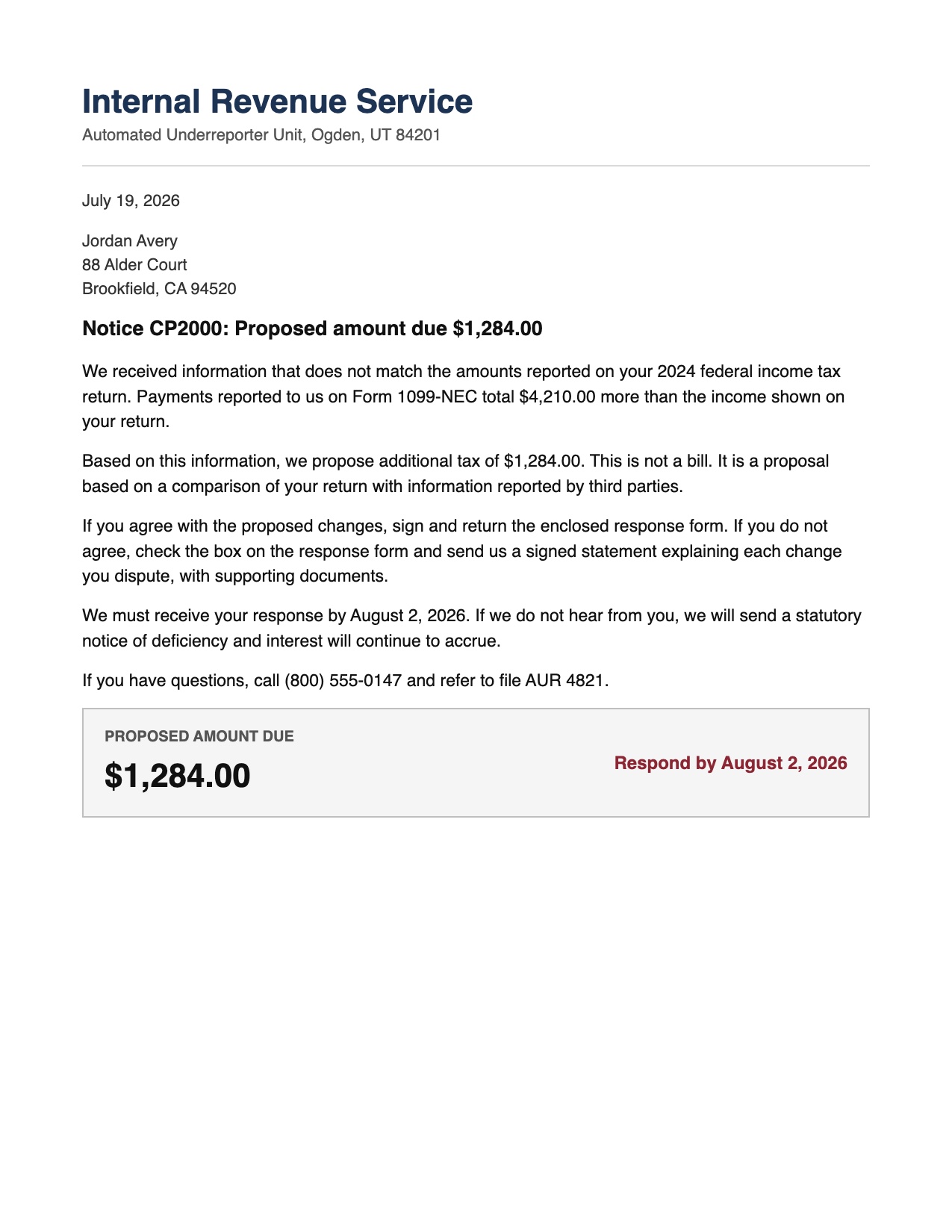
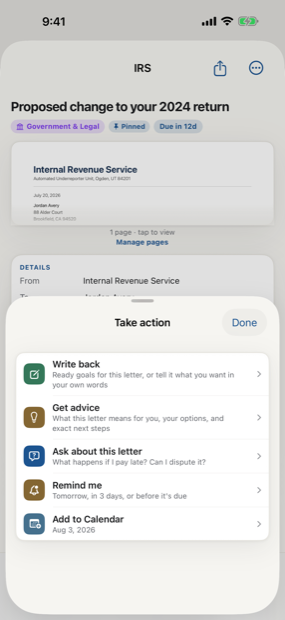
Across every page, LetterDesk shows the full path: read the letter, tell you what to do next, file it automatically, and make it easy to find again.
The next hard letter can be easy.
Scan it, and let LetterDesk read it for you.
In private beta now. Leave your email and we will tell you the day it lands.